Books available for purchase at Blurb.com or Amazon.com

Twisted Logic (2025)
There is a veritable feast of blithesome humour at work in this capricious and mischievous collection of poetically tinged writings. Hughes absorbs the raucous cityscape of his adopted home, Oslo, with occasional forays into London and the North West England, producing a modern psychogeographic blend of prose and poetry. Twisted Logic’s idioms and language have a spirit level that bubbles through the cracks and fissures of meaning, producing an effervescent cocktail of crassness and veneration. When there is melancholy and deceit, there is a hope on the horizon. If there are desires, there are playful undercurrents buoying the reader up. Wade O’Leary, Hughes’ chastened painter, found elsewhere in some of his previous books, is a tragic artistic ambassador who again surfaces in this collection. He acts as a literary foil of flawed liberation and absurdity. Hover hawkishly through it, with one eye savouring skullduggery and peppery banter of the everyday, the other on its savoir-faire. It is a beautifully honest vision of wit and melancholia in an age of derision, magic, and flux, a world that awaits you, as we do, and don’t seize it.
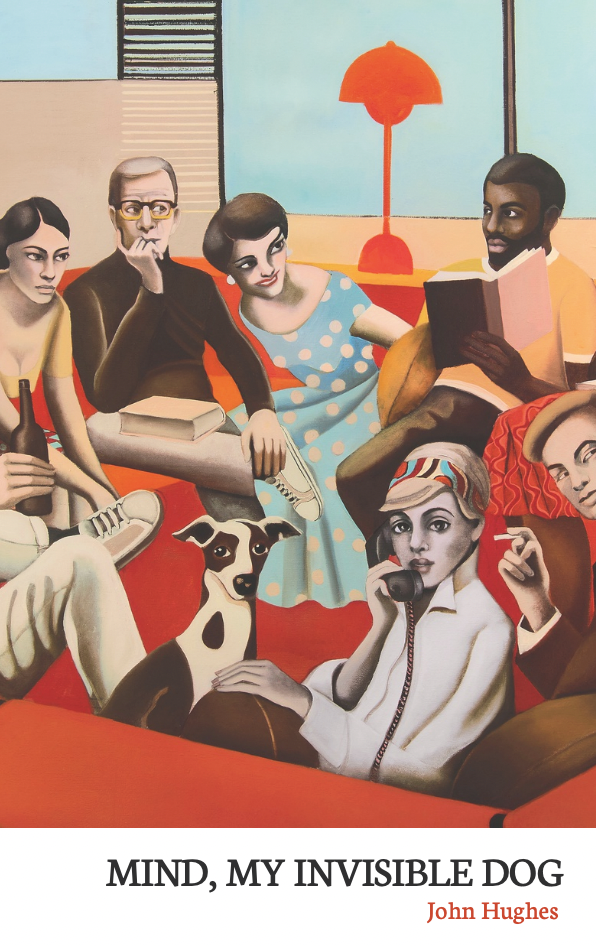
Mind, My Invisible Dog (2024)
Mind, My Invisible Dog, is a reservoir of inspiration. Hughes draws on words as if they are liquid feelings. Meaning and authenticity are richly and craftily pursued, creating big, airy structures like the poet Frank O’Hara pioneered, combined with the restless and contemplative pools of thought that Octavio Paz so eloquently distilled. Intertwining these and other elements in a collection of personal fealty and adversarial provocations, the poems and prose salaciously possess a candid, no holds barred, and insightful and honeyed audacity. Hughes’ poetic touchstones, particularly his mischievous alter ego, Fadder, drink in the vernacular brogue and colourful attitudes of pub tap rooms, making the gentrified world of Oslo and other environs collide with the realms the writers Patrick Kavanagh and Charles Bukowski so richly beatified. He makes burnished observations about love and dreams, hate and nightmares and takes his soul's social contract and his mind for a sublime walk.
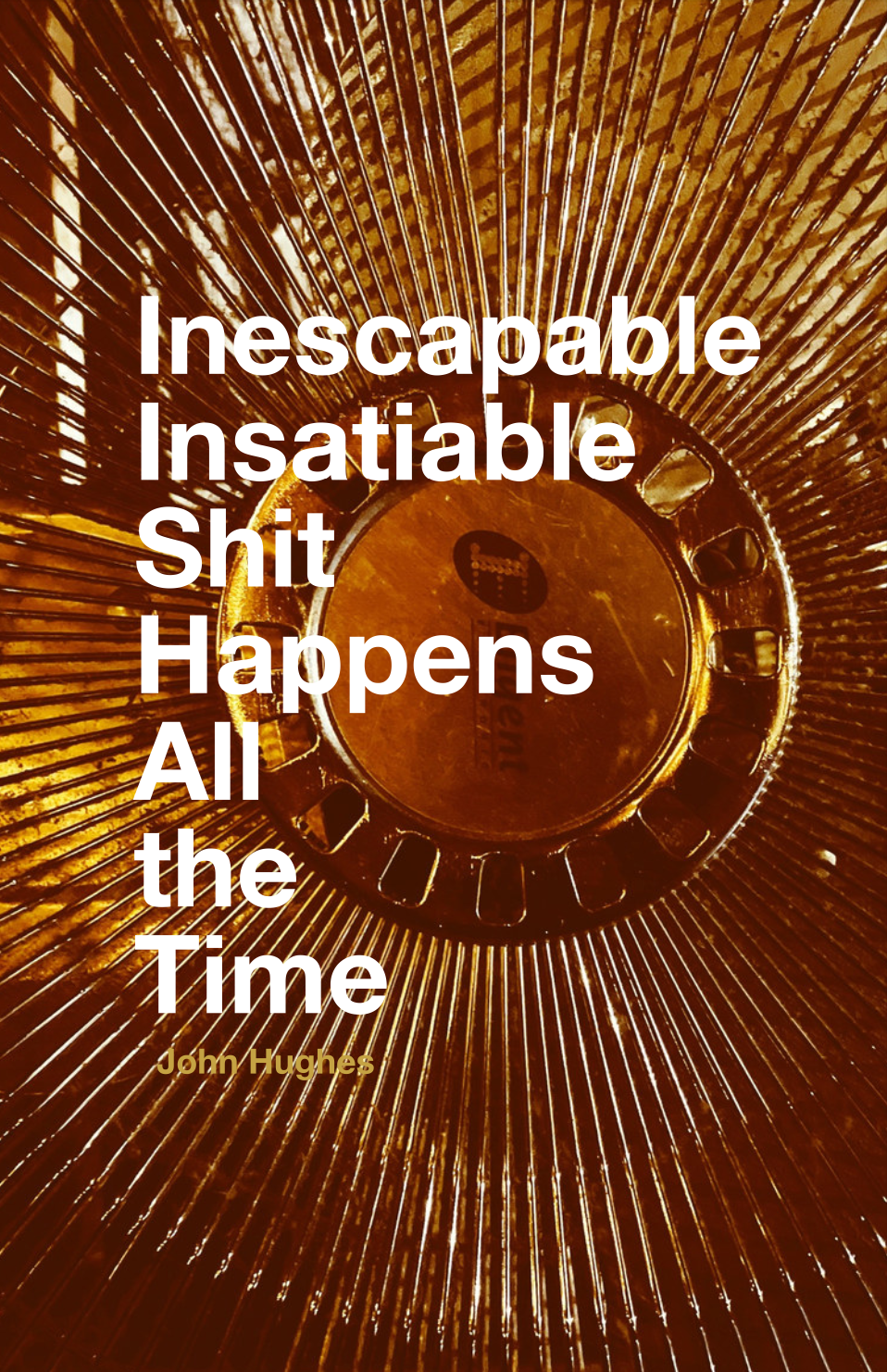
Inescapable Insatiable Shit Happens All the Time (2023)
Inescapable Insatiable Shit Happens All the Time is a collection of poetry with prose interludes by a writer inspired by poets like John Cooper Clarke, Charles Bukowski, and Gil Scott-Heron. Hughes transgresses boundaries and bastardizes attitudes, combining the guttural and humorous colloquial voices of present-day streets and bars into a knot of parallels and paradoxes. In prose narratives like Guide to the Hamartons, two friends, John Joe B. Albino and Pavo la Terriblé, meet an alcoholic Cumbrian as they flâneur around the small town. In poems like Mr. Hyper, The Coal Man, and Hermes, for example, he embodies the subjects and presents personae in the way that Fernando Pessoa developed his numerous pseudonyms. This approach creates poetic elements layered with honest introversion and pugnacity in the face of defeat. The reader is shown rituals of seeing, much the same as John Berger intimated in his 1970s book Ways of Seeing. For Hughes, a leaf has ‘clouds for pillows’, poetry is the ‘wind passing through fences’, and time is ‘calm as a cathedral’s echoes’. The writing flows then pinballs at tangents and complications ripe with scorn, fortitude, sassiness, and candour. Often, an enigmatic sting is in the telling, and although each endgame may resolve, ‘one hip bar’s like another’s destiny’s near or far’, and there is a pervading sense that you might as well be hung for a lamb as a sheep.
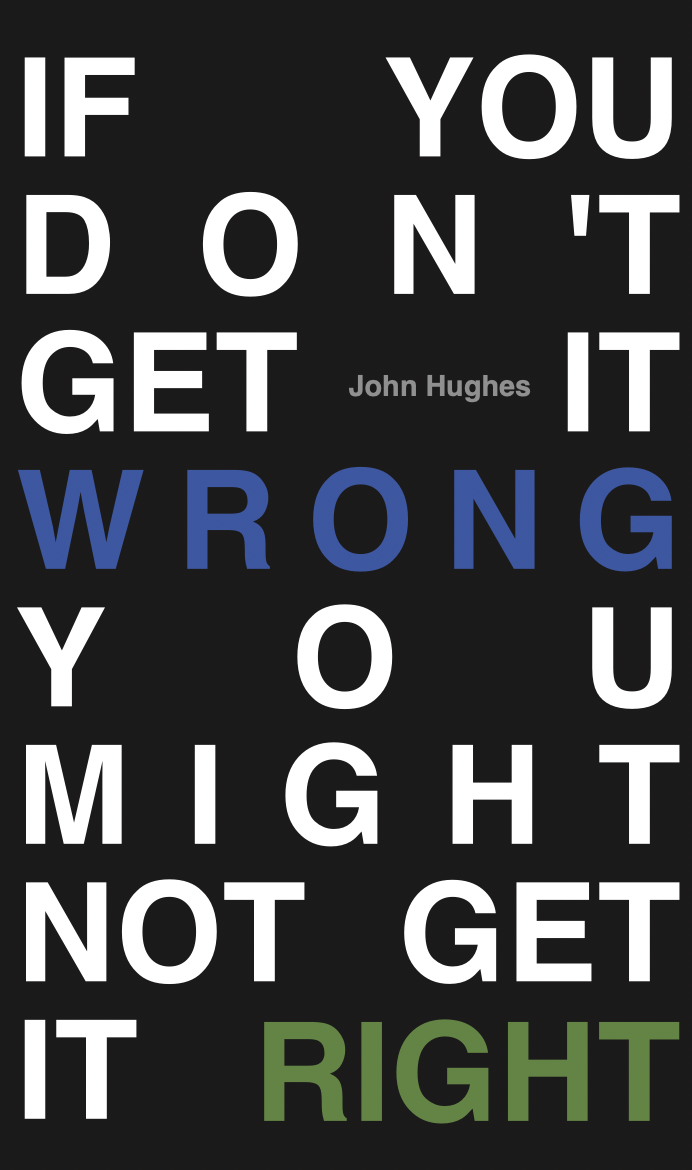
If You Don’t Get It Wrong You Might Not Get It Right (2023)
If You Don't Get It Wrong You Might Not Get It Right is a neon-soaked tapestry of muscular and musical writings for when the shit hits the proverbial micro and macro fan. Hughes is a tangential writer, regularly complementing bawdy gallows humour with visceral verve. To him, the mind is a stung nettle, hearts stones skimming across lakes in the gloaming, time an arrow aimed at cloistered doves, and love a grain of sand on a crumbling shoulder. His vernacular prose vignettes and poems rummage around in the dirty chest of late-night bars riddled with acidic wit and tap room nuggets of ephemera and licentious banter. Drinkers dock like supertankers ordering cherry stone chariots of whiskey sours. Characters like Fadder, Mr. Death Stare, Panama Stan, and the Irish Boudicca emerge fleetingly out of the cracked dirty sink of life, then fade back into dreams and malfeasance. At the centre of this collection is a sequence of over a hundred Senryū, a Japanese three-lined poetic form. Acting as a foil to the lucky losers and vilified fools of the collection's other writings, they are more introspective distillations mischievously seasoned with both a quiet tenderness and prurient truculence.
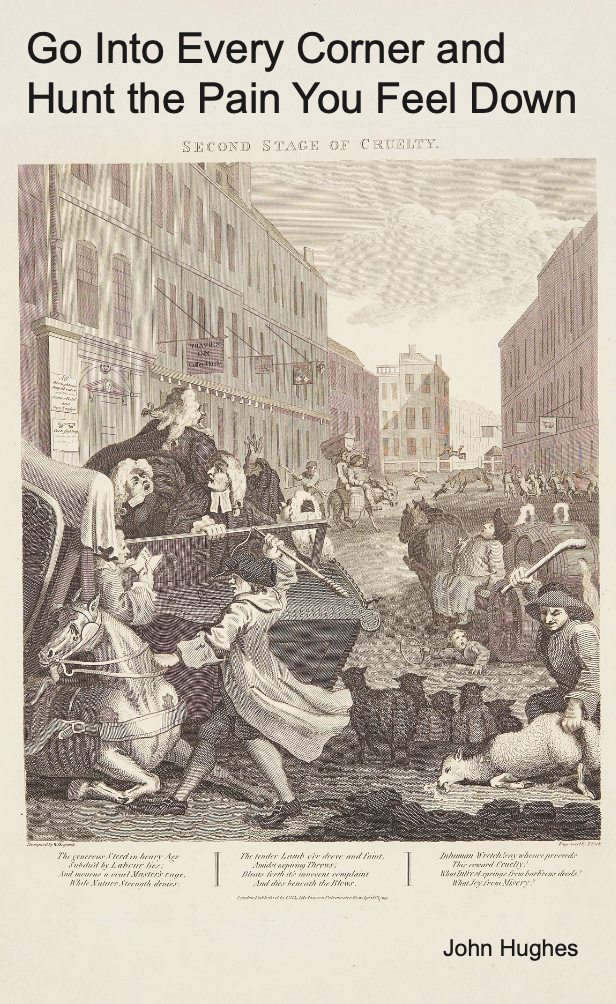
Go Into Every Corner and Hunt the Pain You Feel Down (2021)
Go Into Every Corner and Hunt the Pain You Feel Down is a collection personified by emblematic poems rich in aesthetic thrusts and contoured slipstreams of language. Hughes elasticizes perspectives, charging them with oblique strategies that guide the reader to listen attentively to words like birds do for worms. His sanguine and glib asides, pebbledashed streams of consciousness are intertwined with dexterous metaphors that shake, rattle and roll. No Hughes collection would be complete without lewd language redolent with counterpoint punching, poking, and teasing. Inevitably, bars and the characters and incidents encountered in them are once again sources of gallows humour. People are Putty or Gaffa tape in a big sick cake where 'wankers work at their own despair', their 'heads sunken couches', and death sticking to them like flypaper. Symbolic grey areas, lines, no man's lands, boundaries, sentinels, and thresholds act as instinctive anchors. The poems are hinges and bridges that hunt for meaning amongst the urban and rural shadows. Mr Wazzo has his orchard for an orchestra. The fjords bellow with a symphony of sails. The rush hour, a job interview, a fountain, a high diver, and Formula One racing all come under Hughes' provocative and restless gaze.
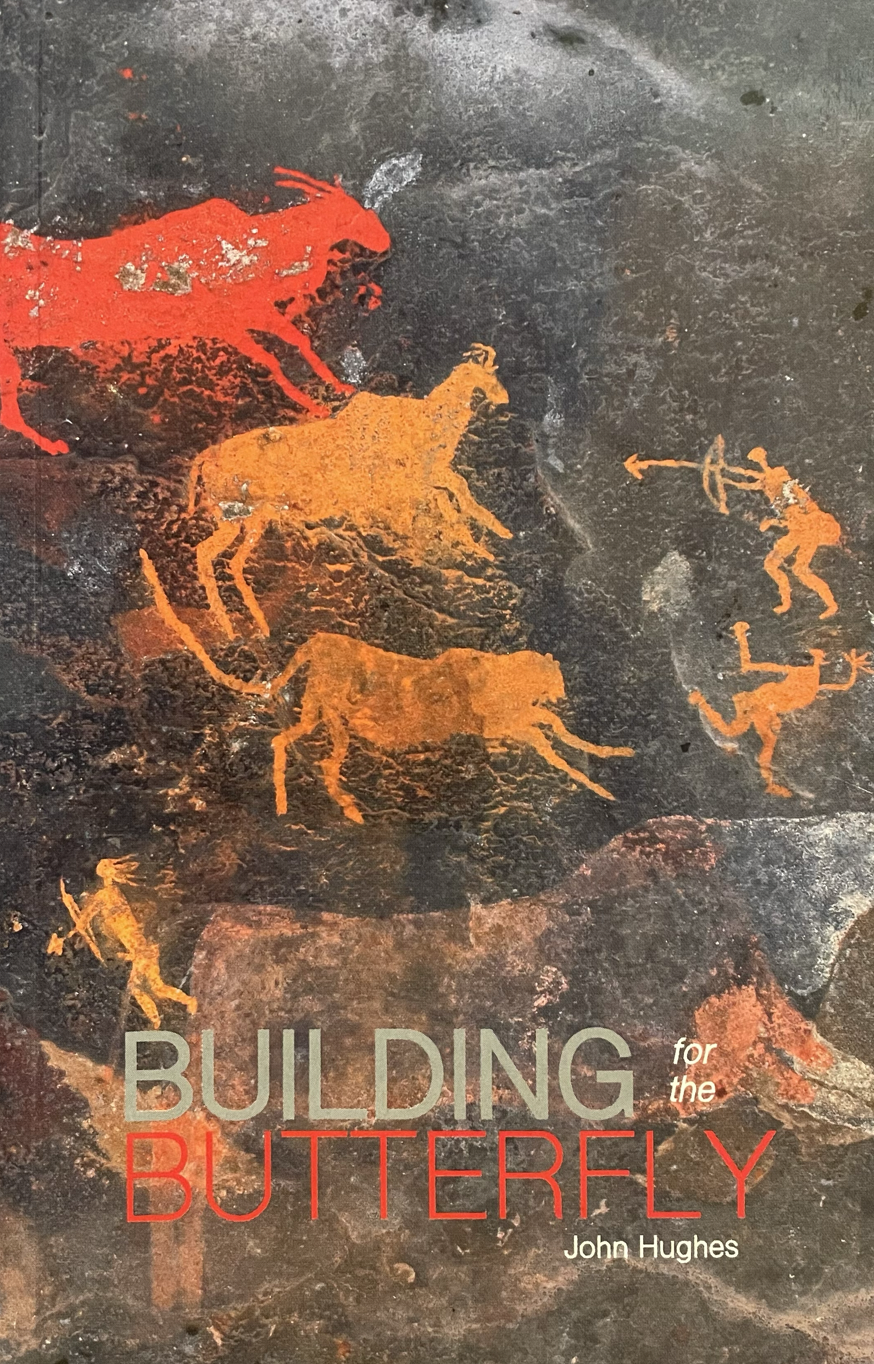
Building for the Butterfly (2020)
Building for the Butterfly is a collection of spontaneous poetic compositions that explore themes of uncertainty and crisis, the city and nature, with immediacy and degrees of objectivity. The language and diction are bound by determinate and indeterminate symbolism and idioms. Hughes writes rapidly and fiercely, often compounding layers and countervailing juxtapositions. The collection is a verse journal examining fear, anxiety, and confusion with veracity against a backdrop of sudden change, when the writer’s child was suddenly hospitalised with an undiagnosed sickness. Inspired by Ted Hughes’s Moortown Diary's search for a sense of place and a fleeting glimpse of a Red Admiral butterfly that flew by during a late summer Oslo rush hour commute, Building for the Butterfly is both a remarkably tender premonition and a raw and protective healing poultice intended to be applied by being read out loud. Enjoy its bold candour and waspish reflections.
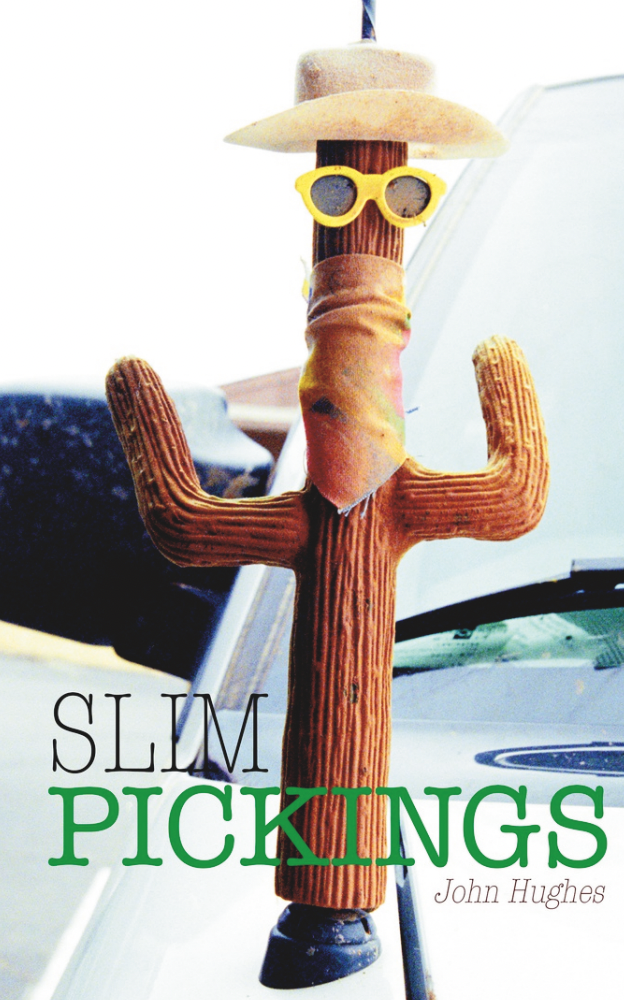
Slim Pickings (2019)
Slim Pickings is a gloriously rich and rum array of poems and vignettes largely drawn from the weird and wondrous delights of Oslo. The writing is a gritty and darkly humorous testament to the city’s subterranean underbelly. Wacky encounters interweave throughout the collection. Unsavouriness lurks around every street corner, and inside the bars, if you scratch the surface, there’s plenty of lurid prurience and puerility swilling about. Hughes sees the world from the paradoxical standpoint of a romantic cynic. His visions flash and rumble with an equal measure of contemptuous tenderness and melancholic restlessness. He has a playful ear, which bristles with soaked-up vernacular, but he also possesses an inner quietude, ripe with vivacious and lush imagery that creates philosophical interventions in the poetic narrative. Whether from the basement of the soul or the penthouse of the heart, Slim Pickings is a collection of candid and mischievously playful writing that will lower and elevate your imagination to the sublime and the ridiculous.
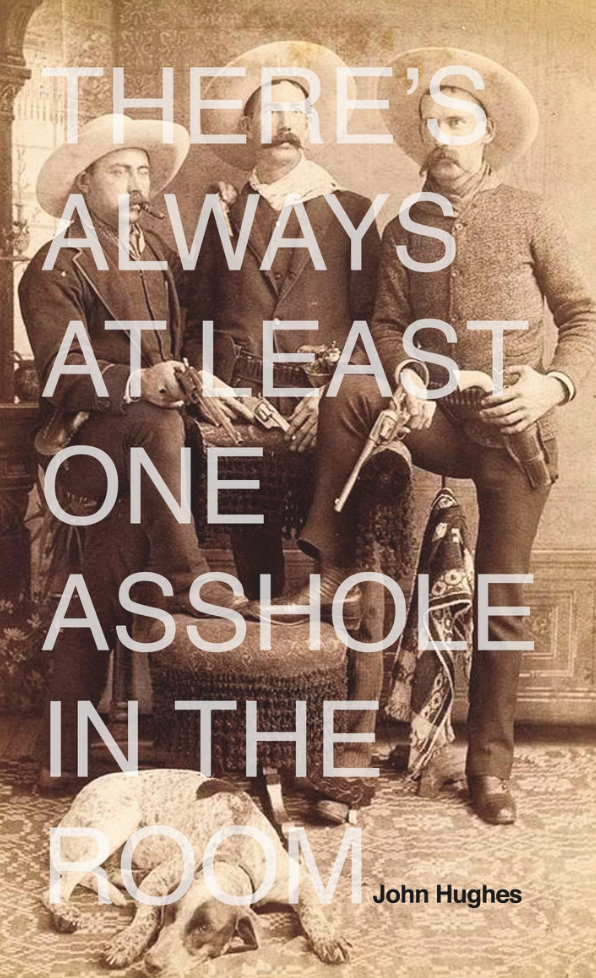
There’s Always At Least One Asshole in the Room (2019)
The struggle to integrate and pacify restlessness underpins this carapacial collection of verse. Combining both anger, gallows humour and droll bathos, set against the backcloth of the city, with an ear for waspish vernacular, Hughes meanders mercurially through its watering holes and chance encounters with a surreal consciousness. Possessing brutal beauty and a blood-and-sand mentality, he muses on how love and assholes fake it past his reckless existential bullshit detector.
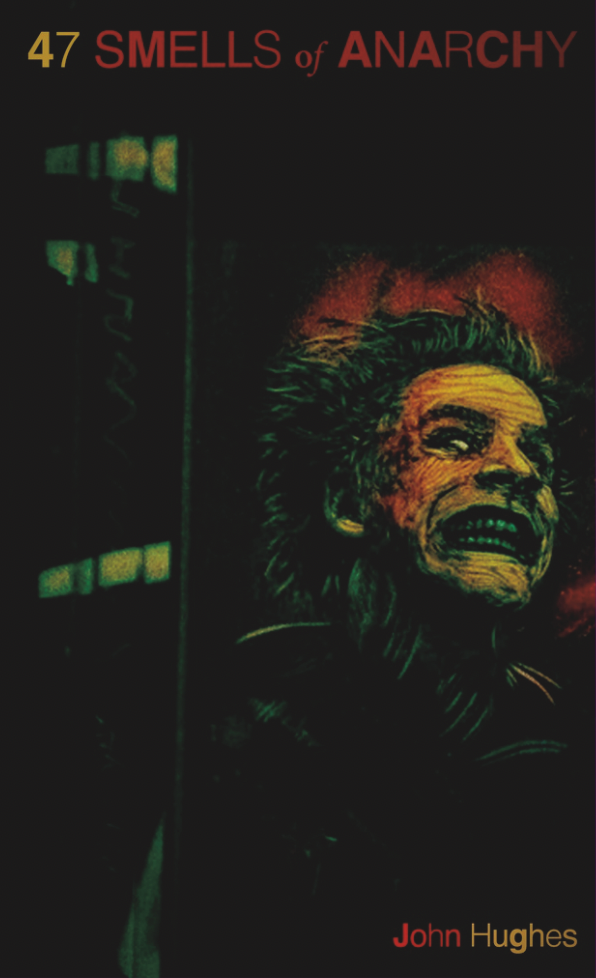
47 Smells of Anarchy (2017)
There is a becrazed struggle and bemused incensement at work in 47 Smells of Anarchy. At its heart are painterly flourishes that draw on both the sacred and profane. With a dextrous ear, Hughes is capable of shifting between the colloquial modern-day language of the street and a search for the mysticism in life. The collection of lyrical verse is a pseudo-spiritual pilgrimage through our hopes, fears, and loathing, our choices and regrets. His bruised intellect clearly draws from the Metaphysical poets, delivering a strange brew of Romantic cynicism, the world represented as a place of tender reckoning and nutty sledgehammer blows.
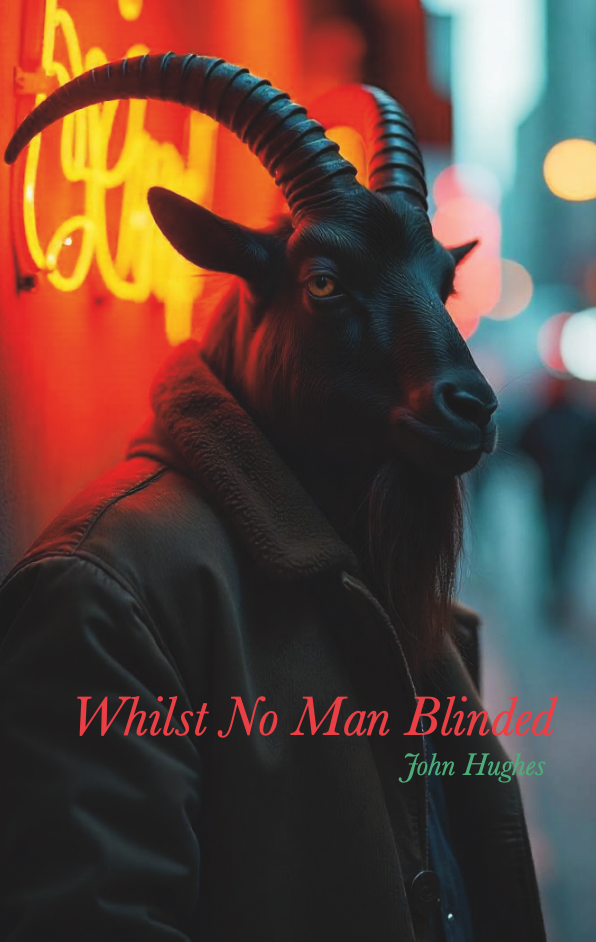
Whilst No Man Blinded (2014)
Whilst No Man Blinded is a free verse narrative monologue inspired by Baudrillard's book The Perfect Crime, anddrawing on the brazen verve and broth of Ginsberg's epic lament poem Howl. Hughes represents the French philosopher's idea of the 'murder of reality' in the form of a half-human and half-animal urban hipster who has transformed into a burnt out goat man who's been surviving in the concrete jungle, fighting urges to return to nature. In Greco-Roman times, bipedal fauns or satyrs were present in mythical stories, and they often symbolized fertility. But it was also a time when the burning out of eyes because of lies, deception, and the false tellings of the chorus, were prevalent. In this poem the goat man exists in an illusory state of hyperreality, transfixed between deterministic and naturalistic forces. While the crime is blazing, it is hard to know how one becomes what one is, or perceive and know what is happening to us and then hang it, choke it with force if necessary, a pseudo crime, victim, judge and jury rolled into one phoney legitimiz wased sham. The work richly apes personal and political hyperbole, the language fused with rap doggerel and kaleidoscopic questioning declensions. It is a celebration of a counterfeited psyche both alienated and revelatory, that is plagued by pseudo crimes. It offers up a brilliant flight of imaginative fantasy, and is a triumph of light over darkness.
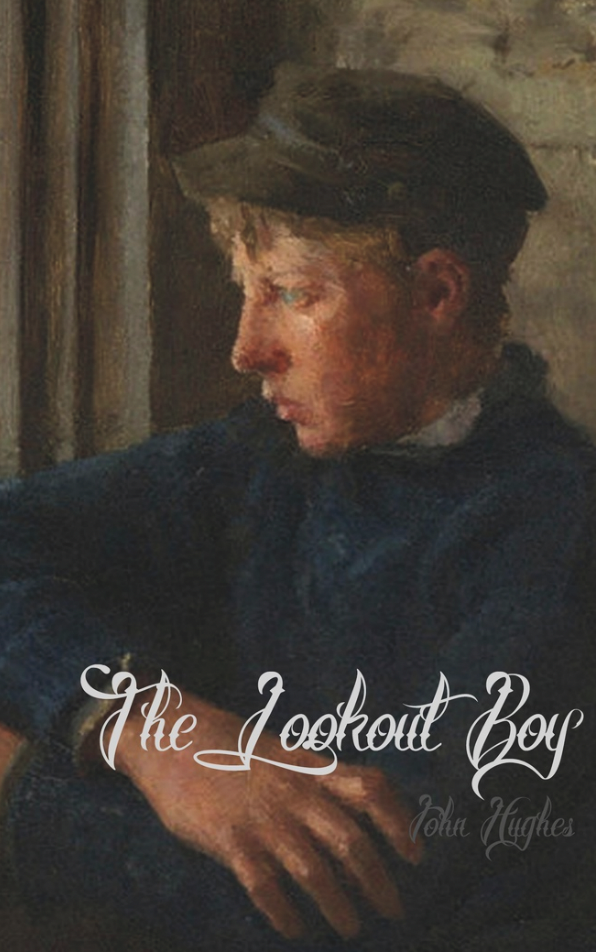
Lookout Boy (2012)
The Lookout Boy is a pseudo-autofictional narrative sequence of projectional poems, evoking the genius loci of the idyllic Agder coastline of southern Norway. It is a work of reminiscence, shining the beam of a searchlight into the past over four generations of the Corneliusen family, seen through the eyes of Arne, the last remaining son in four generations of mariners. Widower Arne, a retired teacher who, as a boy, used to be a lookout helping to spot and guide boats into the port of the fishing village he grew up in, is in ailing health and preparing to slip off his mortal coil. When he discovers in his quayside home an old travel chest full of family heirlooms, he sifts through the treasure trove of objects. A series of powerful emotional responses sparks to life, and he finds himself living in a world of flashbacks filled with the ghosts of his ancestral maritime past. Enriched by loss, love, and regret, nature and the sense of permanence within change, The Lookout Boy alludes to the voids in family history, the acquiescence of youth, the traits of old age, where distant memories often appear presciently charged and as redolent and real as the present.
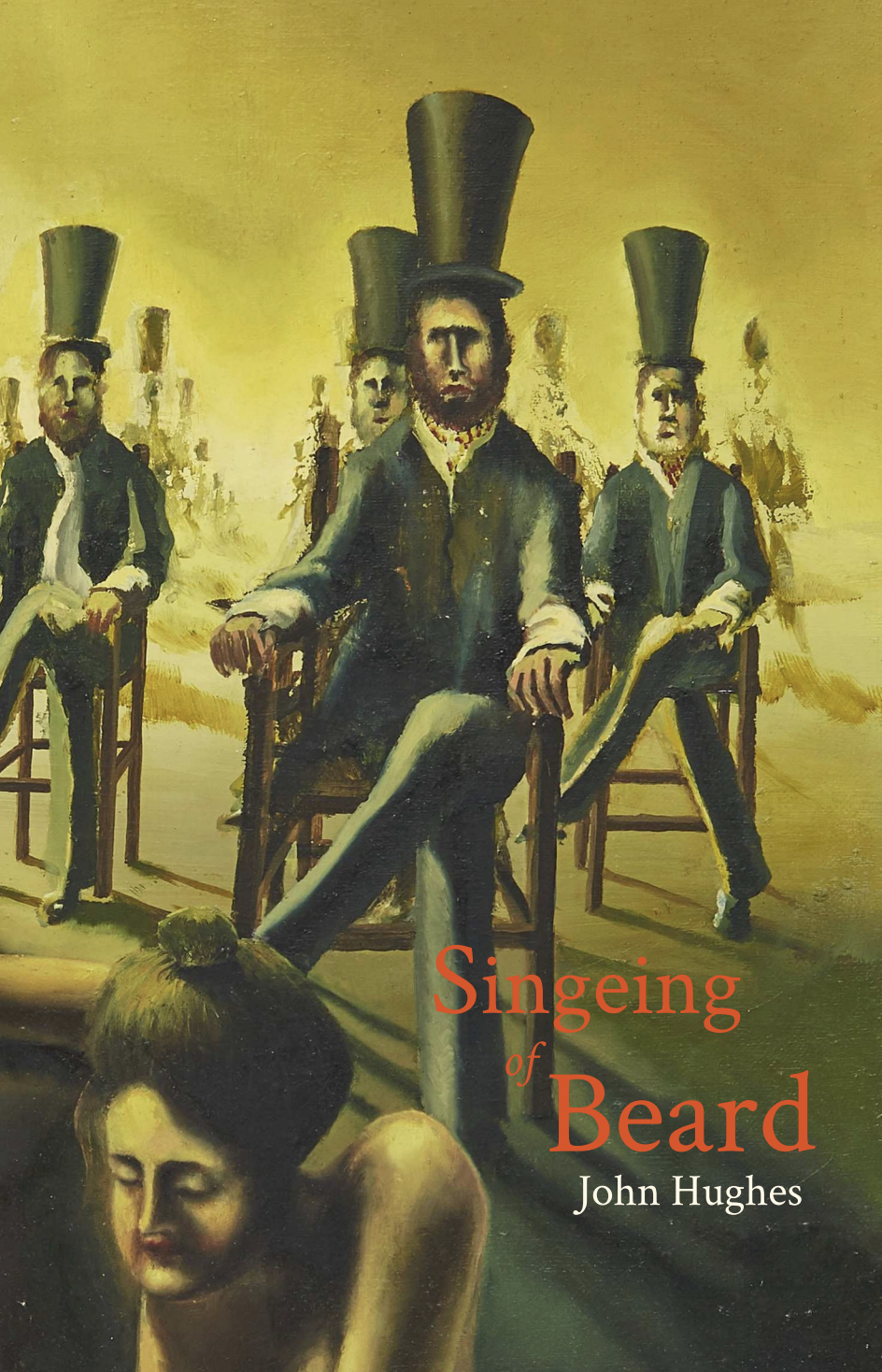
Singeing of Beard (2012)
There is a Gordian knot that needs to be cut in this intimate collection of confessional poems. In life, we are often doing one thing but thinking another. Sometimes we are reaching forward, but we turn back. Hughes is able to balance in limbo on the twilight zone bridge of the past and future, questioning, wounded, burning, and healing. He is both a romantic and cynical witness to feelings of self-doubt and escape, survival, and self-destruction. His ear is solemnly attuned, his tongue erring to the waspish. He takes no prisoners, least of all himself. Written with the city of Oslo ever-present in the background, one might almost see these writings as intimations or a letter addressed to a long-lost, unrequited lover waiting in the rag and bone shop of a portentous future.
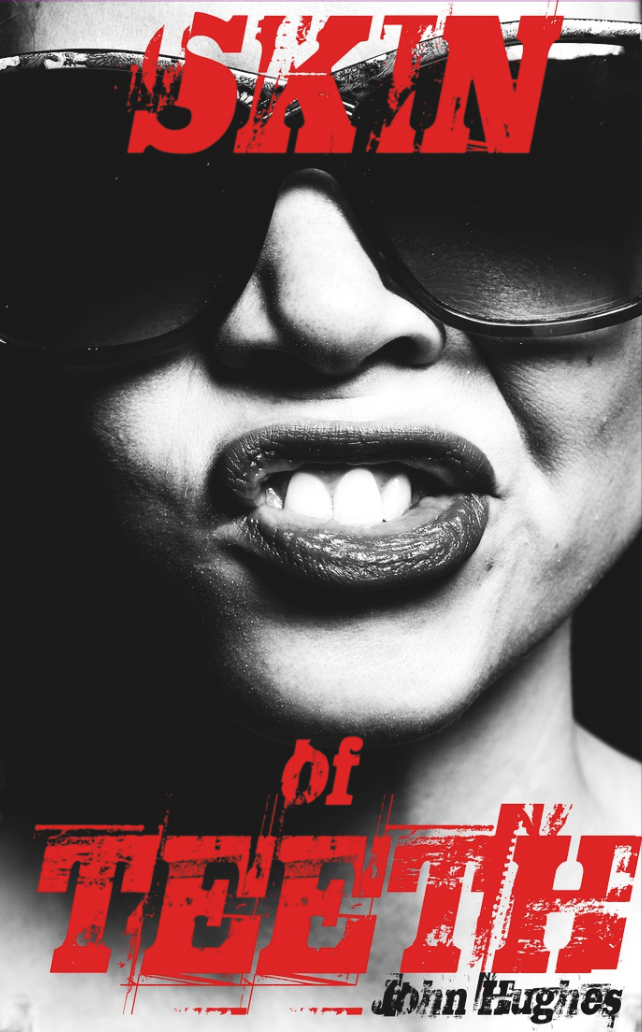
Skin of Teeth (2010)
Skin of Teeth asks us what happens when nobody hears your heartbreak? Where is home when you feel rootless and restless? Where can happiness be found? The writing stems from the grit of a grimace, the wince of a face and is gilded with redemption and yearning. With the search for happiness at its core, Hughes is able to strip bare the meagre truth and flesh out the cruel beauty of love. Equally dark and humorous, sometimes wry and lewd, this collection illuminates with a furious spirit and intimate curiosity.
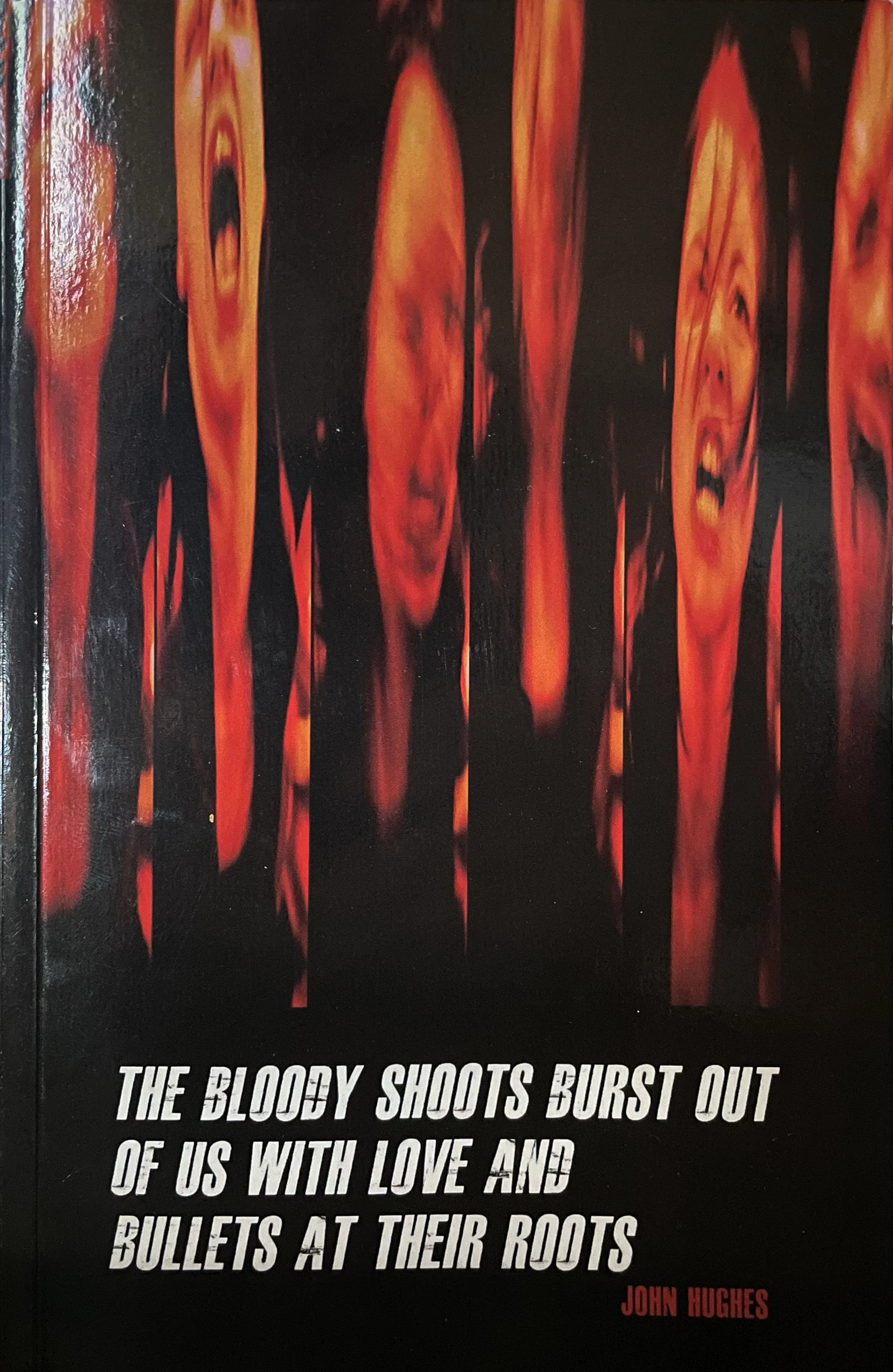
The Bloody Shoots Burst Out of Us With Love and Bullets at Their Roots (2010)
Wade O'Leary, aka Fadder, is an artist painting in self-imposed exile in Oslo. He loves carousing in bars, barmaids, and women. As a restless bachelor with no distinct career plan, his nights are spent sedulously trawling through a sordid apothecary of murky sexual waters.
'As Fadder dug in for the long haul, admiring the female form from above, he could not help but notice a tattoo staring back like a cat's eye on the supple shoulder of the road to GO. He tried to focus, gripped on harder, staring at the paint on the walls that lay directly ahead of him in the hope of a sustained stamina-based state of beige transcendentalism, and drove like a demon on the berm of slickened tarmac, hubcaps flying off through the bedsheets until they were running on fumes; she was out of ass-gas, and the steering wheel could swerve no more with accurate purpose.' Extract from ‘At the Deli’
Hughes writes with vivid candour and zeal about city life and the pursuit of happiness. This rich and rum collection of short stories and vignettes is full of hilarious and sad encounters with a menagerie of women who seem to have just as hard a time finding love as its protagonist. The writing is comically savvy, bittersweet, and brings the mysteries of the Scandinavian female psyche screaming to life.
‘Moments later, she climbed over him and they both lay there on their backs amid the amber light of the bedroom lamp. It looked like they were floating above a large tunnel of viscous lava, the tunnel stretching for miles below them, deep into a volcano and somewhere in its vast labyrinth of channels were their molten pasts.' Extract from ‘Scar’
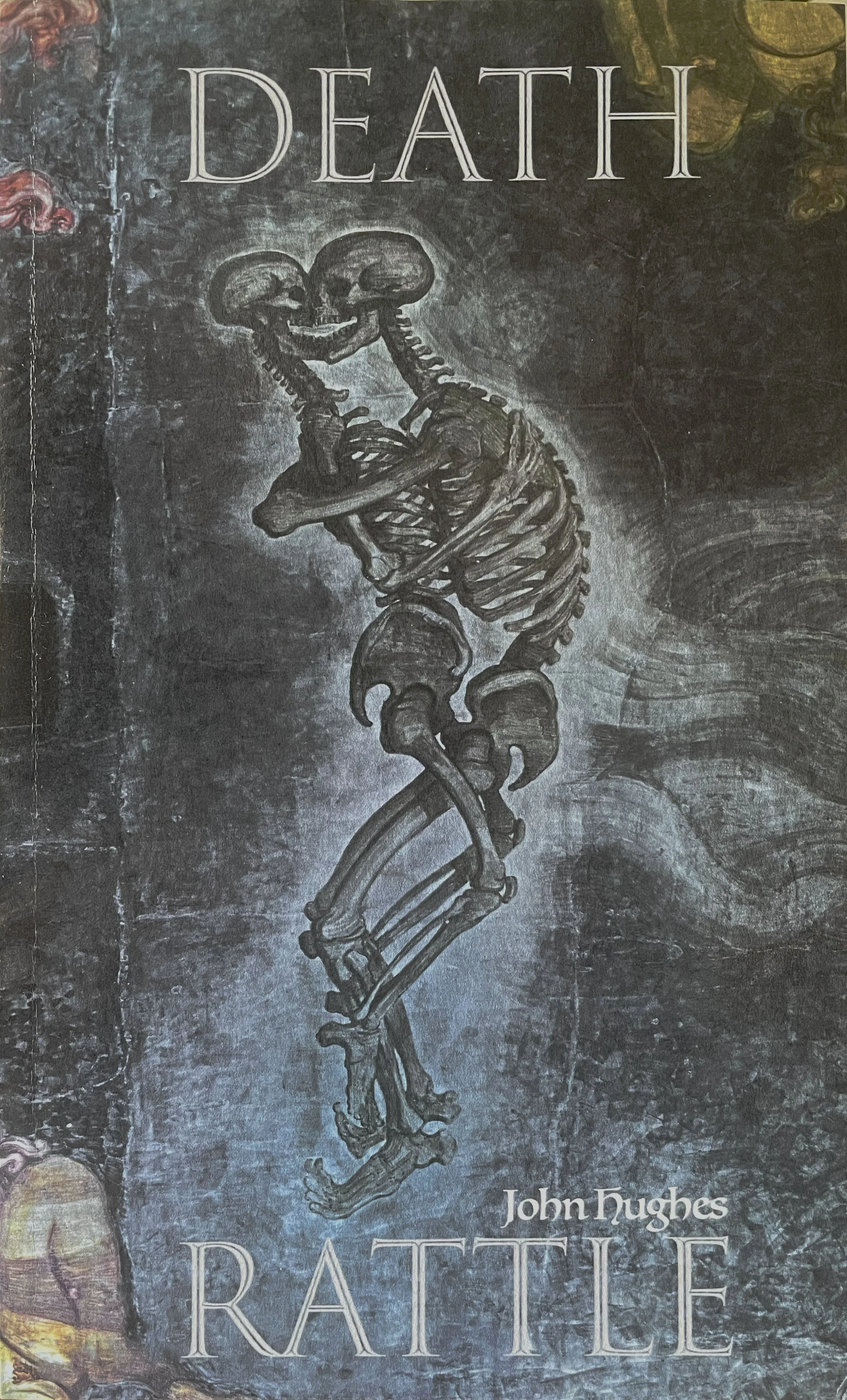
Death Rattle (2009)
Death Rattle is a veritable and kaleidoscopic portrayal of the isolation, joy and abandonment that beats and thrums within the cosmopolite of a city's restless heart. It is a trilogy comprised of poems, narratives, lyrics and aphorisms springing out of Oslo's subterranean streets. The duality of the city and the rural act as a backcloth where love, lust and loss flourish wildly. For Hughes, the city is female, a fleeting, alluring and violable symbol; the rural, a sacred poetic resource gilded with solace, delusion and healing. Through choice encounters and an array of personae, the poet bestows with flinty wit, ruthless reasoning and solemn reflection a wistful eye upon the menagerie of the city's inhabitants.
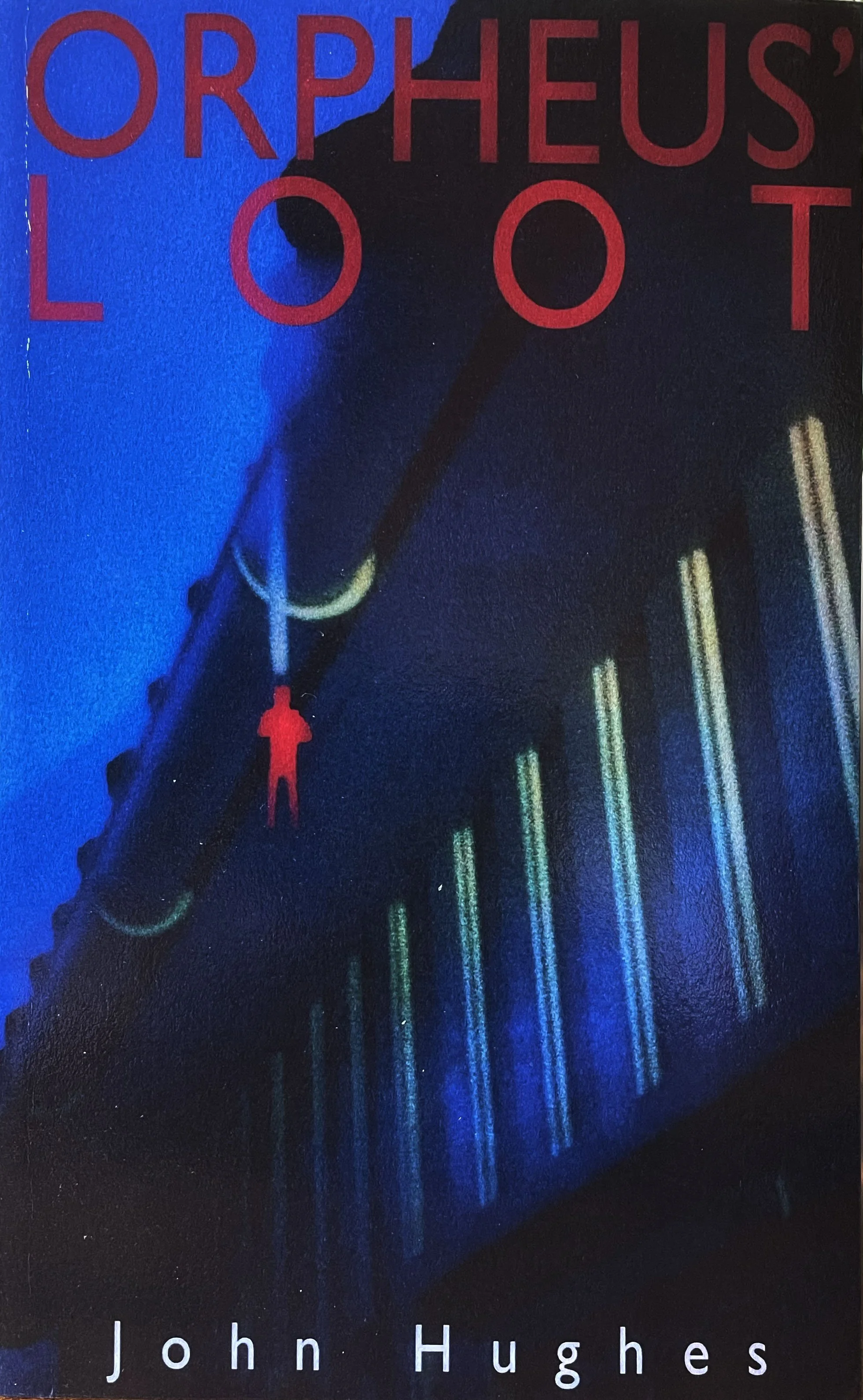
Orpheus’ Loot (2007)
Looking over your shoulder to the estranged past having migrated to another country can be treacherous. Orpheus' Loot explores this transition with abandon and wonder. The excessive delights of Oslo provide the territory for a collection of predicative and confidential writings. Hughes is a soothsayer and mentalist. His melancholic impulses, capricious humour, and mercurial encounters with an array of peculiar characters are the catalysts that enable him to loot the nature of rootlessness, addiction, and dislocation. Love freezes in the winter nights and melts mysteriously away in the heatwaves and hangovers. Peace of mind is thwarted by doubts and derangements. There are buried treasures to savour here if you can find yourself exiled on a new map.
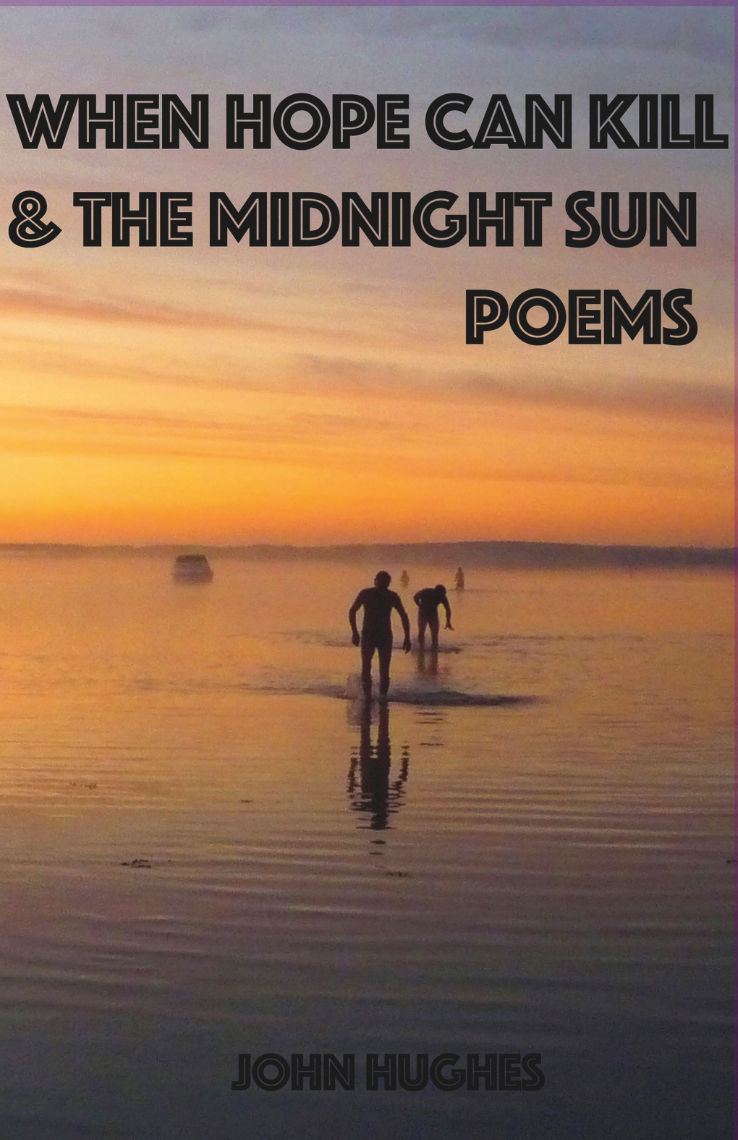
When Hope Can Kill and the Midnight Sun Poems (2005)
When Hope Can Kill & the Midnight Sun Poems is about how relationships form and dissolve in the most unlikely of places and how the old wars of the heart bemuse and confound as new beginnings appear on the horizon. In the twilight world where nothing fails to sink below the horizon and everything depends on a fragile peace, people lose and find themselves after the fact. Love rescinded, demands brutal answers to complicated questions, and hate diminishes and returns with renewed vigour. Combining a restless brew of honesty, anger and irony, Hughes has created a stark world with frightening, humorous and beautiful writing.
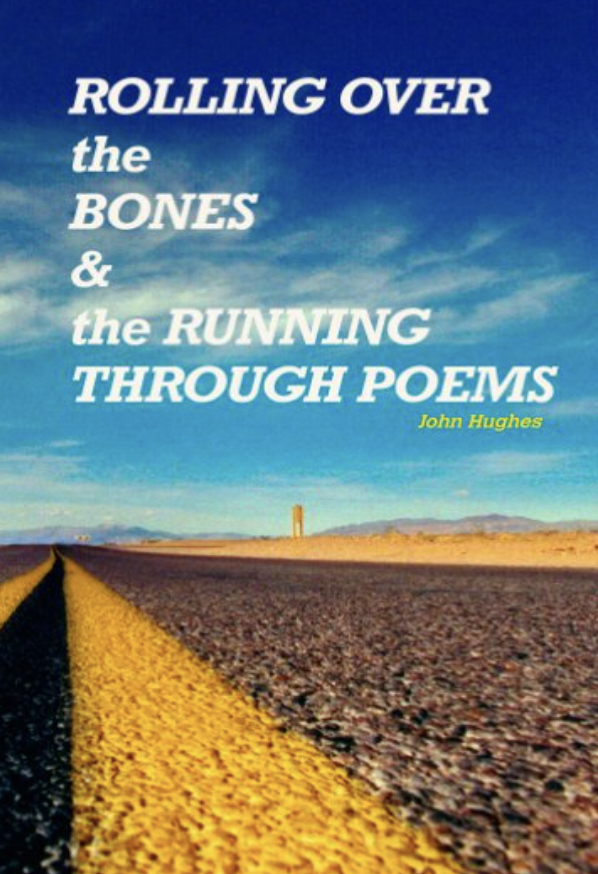
Rolling Over the Bones and the Running Through Poems (2002)
Rolling Over the Bones and the Running Through Poems is a continental collection spanning three years during which Hughes journeyed from subterranean London to West America and Australia before returning to the author's native backstreets of North West England. The desire to explore old wildernesses, the decayed legacy of the British Empire, and the complexities of human relationships are yoked together with phlegmatic candour and curious piety. Whether passing through deserted small towns of the American interior or sailing on the Great Barrier Reef, dreams of citizenship and discovery of a sense of place dog Hughes as he zooms to another vanishing point over the horizon.
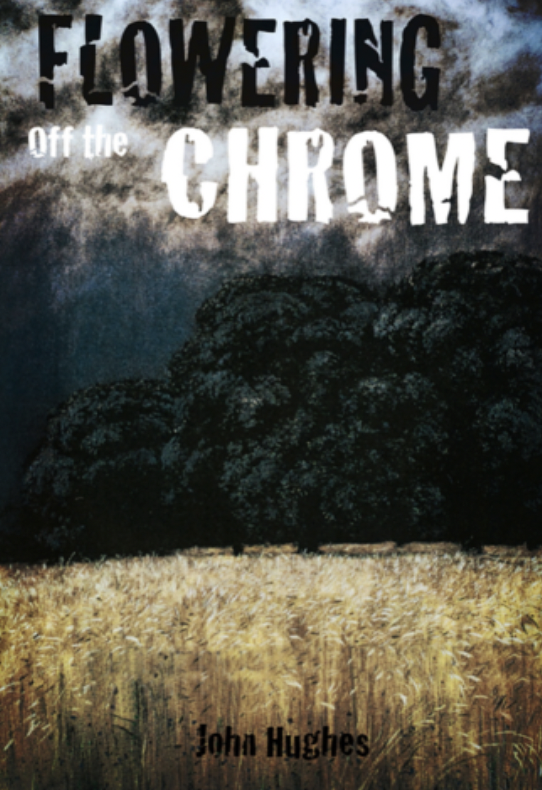
Flowering Off the Chrome (2000)
Flowering Off the Chrome is a collection of symbolic poetic projections into the rural landscape. Removed from the urban sprawl, set during midsummer, and narrated through a series of dramatic monologues, Hughes has created a rich sequence of see-sawing yarns about the comings and goings on a farm he knew as a child. Looking back through the eyes of an old man who chose to remain and work the land, Hughes confronts the genius loci and the idea of home. It is unusual to find such a young poet plying such a rural path, but these playful and well-cured parables succeed because they germinate from a wistful charm. Galvanised by the work of poets dating back to Virgil and colloquially owing much to Robert Frost and Edward Thomas, Hughes asks, what is our relationship to nature? What is it that we nurture there? As with all of Hughes' work, it broods with tenderness and chooses solitude as a tool of illumination. As always, a vigorous undercurrent of restlessness floods his language.
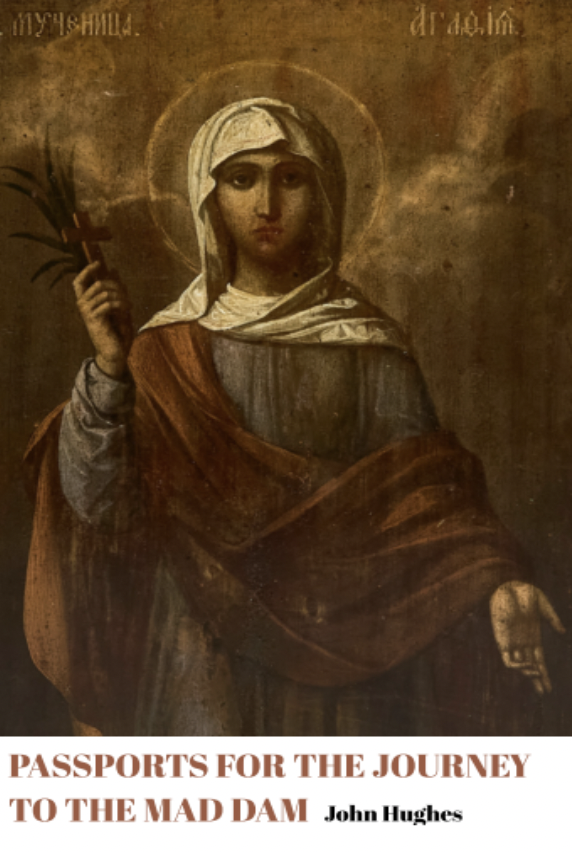
Passports for the Journey to the Mad Dam (2000)
Passports for the Journey to the Mad Dam is an uncompromising and startling selection of poems gleaned from almost a decade of Hughes' early output. Acting as an excavation into restlessness, the poems seem to inhabit a menagerie of vivid daydreams, where life seems fleeting and permanent. As much as the writing is tender in outlook, the poems are equally colloquially savage. The identities and perspectives explored are brave and innocent, forgotten and fearsome, all bearing witness to themes of sex, death, and childhood. The poet has an eye for the tawdry, an ear for the subtle and brutal, and a heart and soul that brings joy to the mythical, far side of despair, but perhaps his most redeeming quality is that his candour picks over the old bones of poetry so that boundaries, real or imagined, surreal or symbolic, are continuously transgressed.
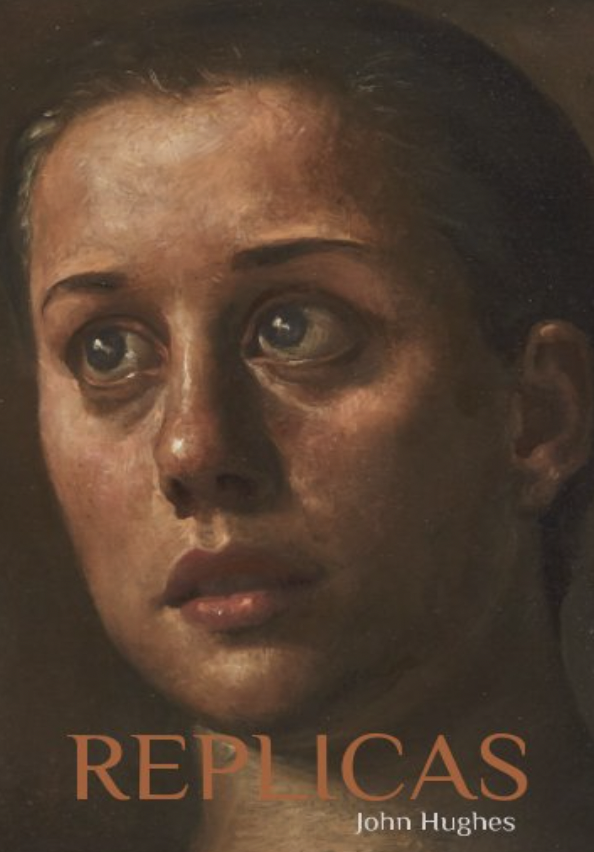
Replicas (1999)
Replicas is a kaleidoscopic collection riven together with a wide range of traditional poetic forms and techniques. The vast majority of the poems have a twin. The work as a whole acts as a mosaic of mirror images, intertextual reflections and thematic refractions. The poems are a rich blend of magic and realism. Hughes is fascinated by physical, psychological and ideological boundaries, the possibilities they present, and how we navigate them. There are symbolic existential odysseys and anecdotal parables garnered from the poet’s assignments as a press photographer. He is both a Romantic and a cynic, his language and ideas peppered with intimate compassion, brazen humour and playful candour. It is a spaghetti junction of a world, but to stand alone gives the individual the potential for self-determinism and hopeful curiosity.
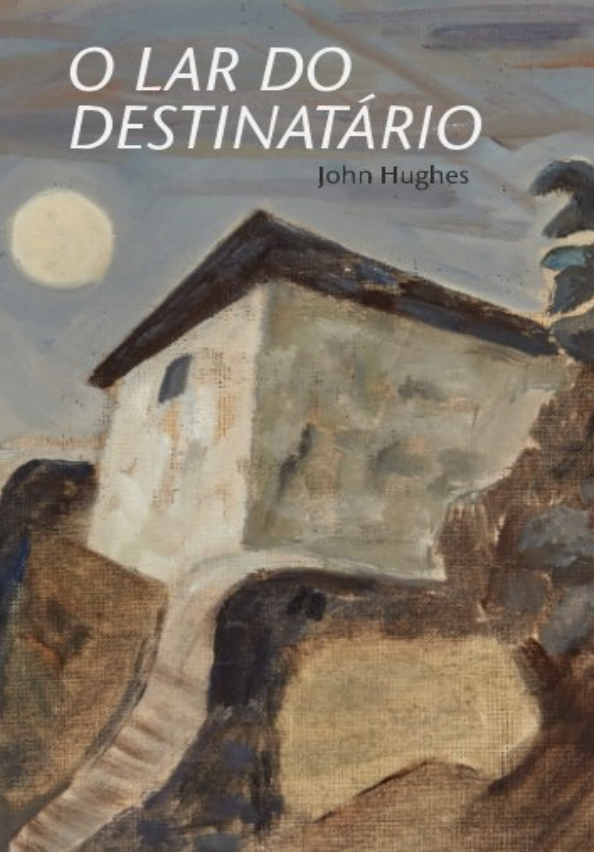
O Lar Do Destinatario (1999)
This inspirational collection of verse was written rapidly during the poet’s stay in the Algarve, Portugal. It is a fine example of automatic writing and how the technique can enrich a sense of place and communion with nature. Rhythms, epitomes, archetypes, and credos imbue the poems with piety and universality. In many senses, it is a sequence of short letters or postcards to be sent home and cherished upon your return. They are a gift to the self and a wondrous and powerful testament to what exists within and without the genius loci.
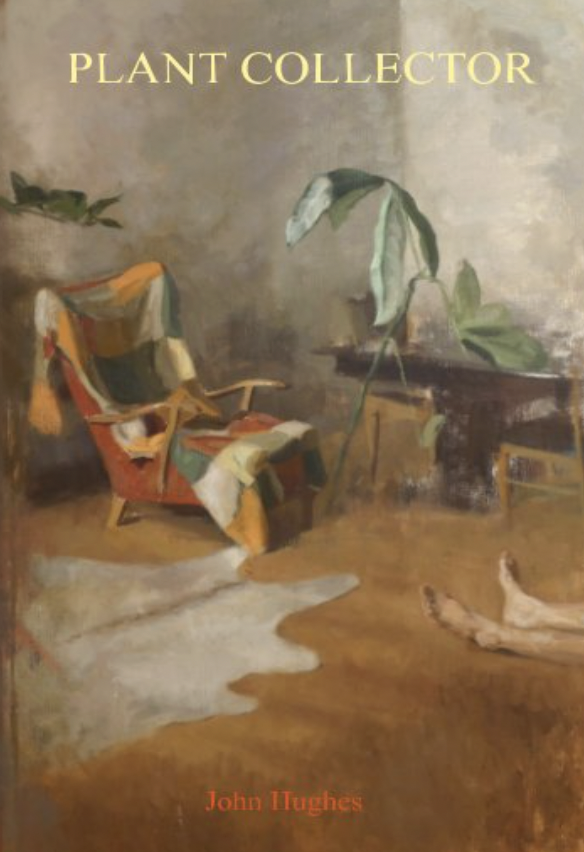
Plant Collector (1998)
The Plant Collector is inspired by a year in the life of the author's garden. The genus of the flora and psychological fauna proffer up a soul classification and act as a catalyst for metaphysical discourse, hermetic inquiry and spirited contemplation.
We are transported on a sage journey through the cycle of the seasons. The plants are submariners, the flowers astronauts, and the lawn a green ocean subjected to the executioner's blade; Jack Frost leaves behind glass sculptures, the iris has a curious beard, the astilbe is a Deutschland princess, and geraniums are starving hoboes; foxgloves are seductive saxophones for addicted bees, veronica is a miraculous bull, and baleful hostas channel Van Gogh's madness. It is a beguilingly wondrous collection of emblematically imbued narratives and idiomatic parables. The language owes much to Robert Frost and the Symbolists and is as versatile and responsive to the elemental as the plants and flowers are to the elements. Earthed in nature's red teeth and claws, danger and joy, fortitude and fragility, life and death fertilize these intimate and meditative universal poems.
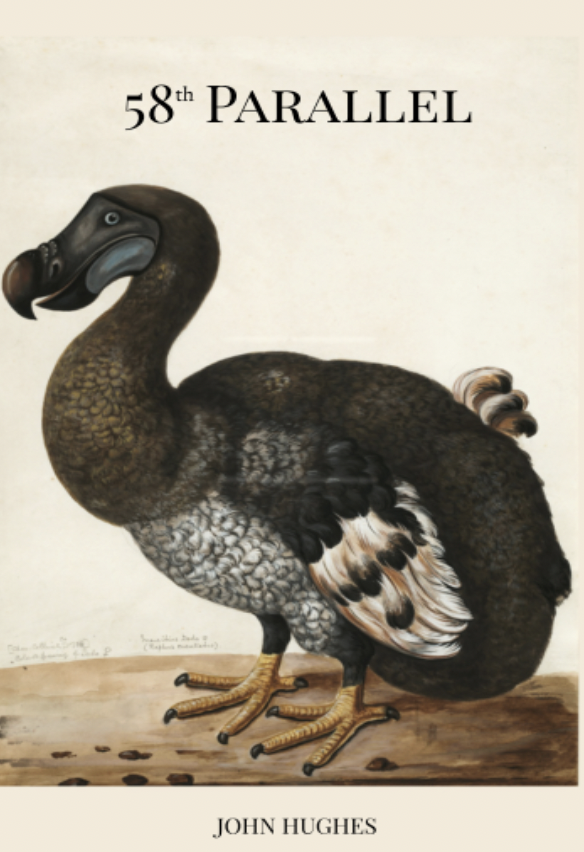
58th Parallel (1998)
58th Parallel is an odyssey sequence of response poems about the Indian Ocean island of Mauritius. The poems are exotic portraits of a place that has transcended its chequered colonial past to become one of the world’s most exclusive package deal holiday paradises. But there is a strange shadow-play at work in the weather cycles of the day and night. It is within this mysterious diurnal interconnectivity that the collection resides. Hughes’ simmering and astonished gaze sees ‘like children of wonder do at stopped clockwork toys'. The horizon is a striking symbolic warning of will itself, and the poems are X-rays full of immeasurable light and dark. In fact, the writing is a pellucid testament looking in to see if beauty can exist when surrounded by such an illusory atmosphere. In this collection, Hughes is on a quest, and the language is what ‘the sand is to the sky, as the night is to day.’ Words are ‘stashed like shells’ and he wants the reader to feel
them between their toes or hold them up to their ears.
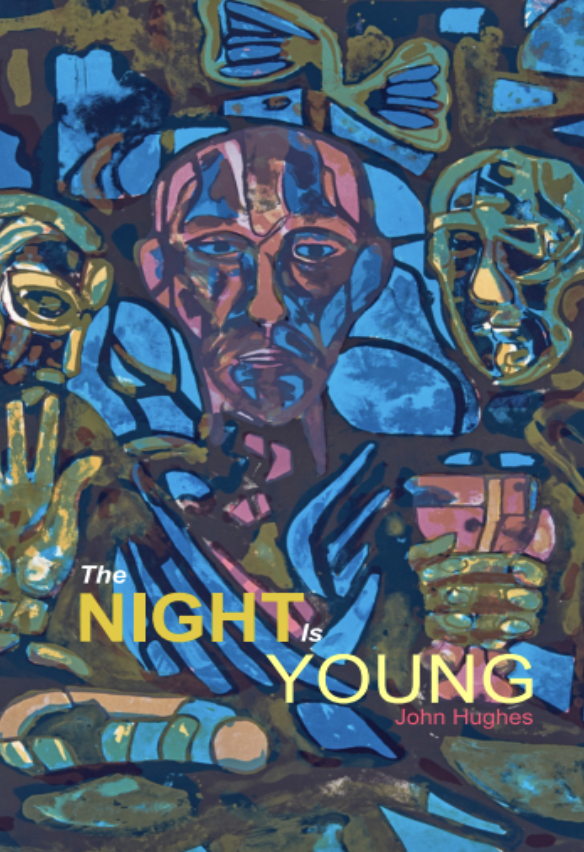
The Night is Young (1997)
The Night Is Young is a lyrical collection of quiet, contemplative poems that seek purposeful communion with ideas of universality. The poetry echoes with glimpses, offerings, and sacraments. The imagery flourishes, then sleepwalks across the page, offering shelter and sanctuary, obliquely charged with a blend of innocence, curiosity, and poise. Whether Hughes is laying stone flags, observing red mullet swimming in a harbour, or a poppy field suddenly flayed, he discovers the rich claret of thought in the macrocosm and the microcosm. As the sun takes the stairs to its throne in the sky, absence, escapism, and thought become a heavy, blinking eye, inviting the reader to pick the locks of language, friendship, and society, then breathe in the air where hunger and the foundations of the day unearth where the night is young.
Touché (1997)
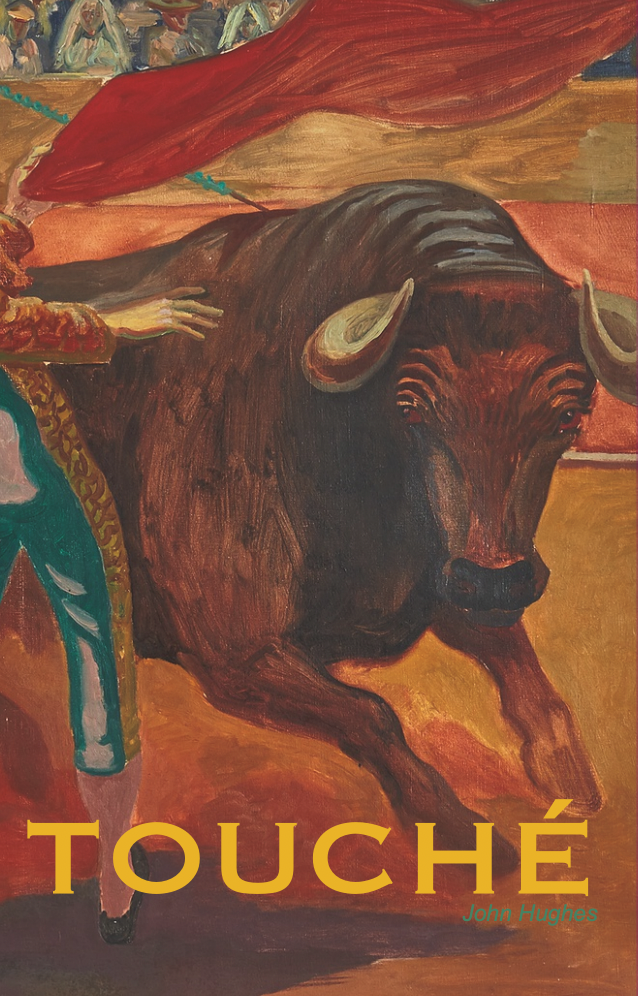
Touché is a kaleidoscopic fusion of dramatic monologues, narratives, allegories, parables, epigrams, and tall tales gleaned from the poet’s formative years as a press photographer in the north-west of England. In this collection, positivity and negativity shadow Hughes. In the 1990s he was beginning to ask questions of the social contract, his stowed away personal feelings and imagination masquerading their fevered way through his private and public personae. The writing depicts the skeletal origins of his later works, provocatively fleshing out disturbing truths aided and abetted by a clear love of guttural, vernacular parlance and repartee. His ear and eyes are lured towards tender stolen moments, communication failures; uncertainties; veiled estrangements; and rendezvouses both intimate and dark. The realism of such naturalistic encounters is carefully counterpoised by dollops of wry and gallows humour and sublime and lush imagery drawn from nature and memory.
Beyond the Dashboard (1996)
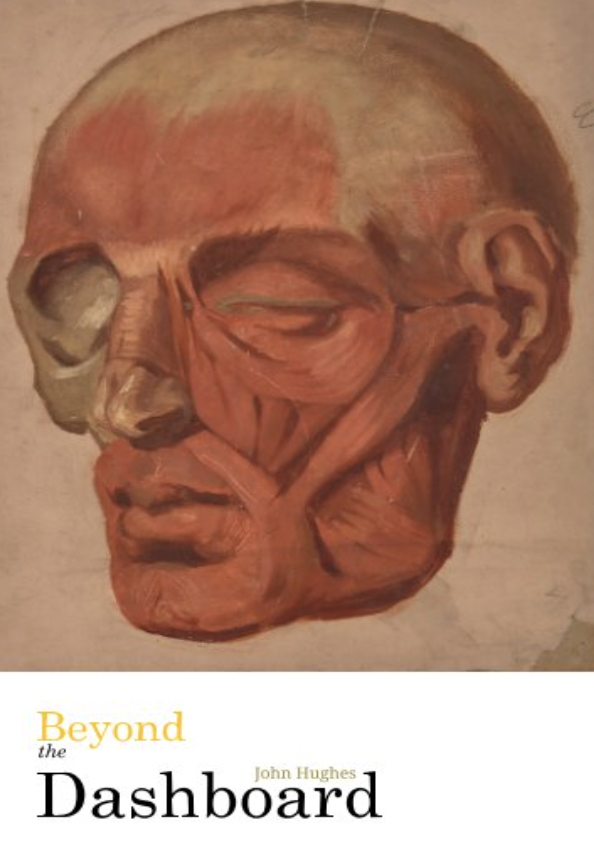
The poems in Beyond the Dashboard explore what happens when work and love transgress boundaries. Hughes' poems were written in the nineties, when he was an accomplished press photographer travelling between assignments, bearing witness to both colourful local characters and society's darker undercurrents. It is a taut and intelligent piece of writing that conveys a vivid sense of isolation, entrapment, and mystery as multiple identities and personae figure out where meaning and purpose can be found in an old Victorian town. Set against this backdrop, Hughes's collection embodies the poetics of the plughole as well as themes of romance, cynicism, and alienation.
The Fiend That He Became (1995)
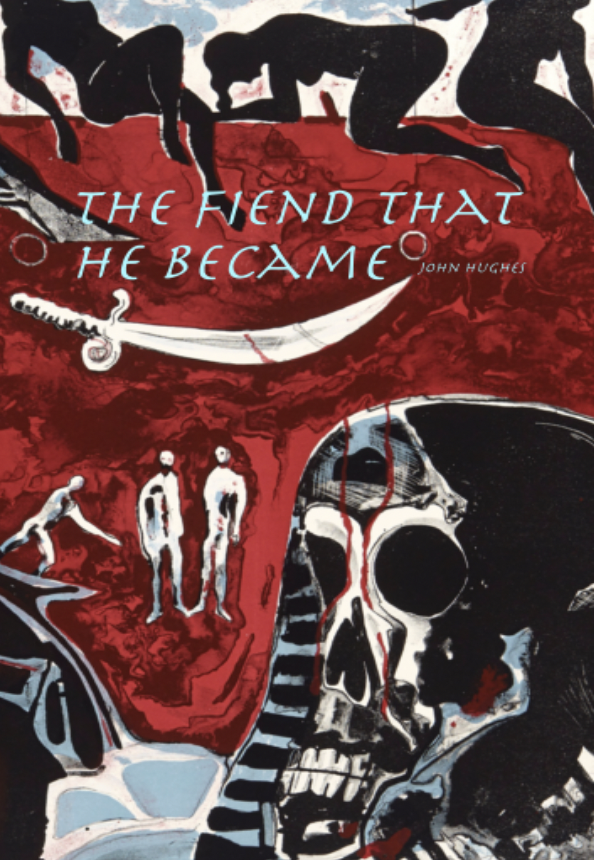
You have to choose a path. Will you take the short or the long one? Which is the right one? What will be the cost to yourself and others? This collection of poems fixates on the antagonistic situations to be found if you are surrounded by machismo and tempestuous female entanglements while dwelling in a shared house with two men in the north of England in 1990s Britain. While working as a press photographer, Hughes was able, via intimate auguries and confessional omens, to encounter places and scenes with a truculent nihilism. He is both a witness and a messenger, an outsider and a citizen, whose candour and curiosity expose the becrazed heart of a reckless young man balancing work, home, and women.
Room Twelve (1995)
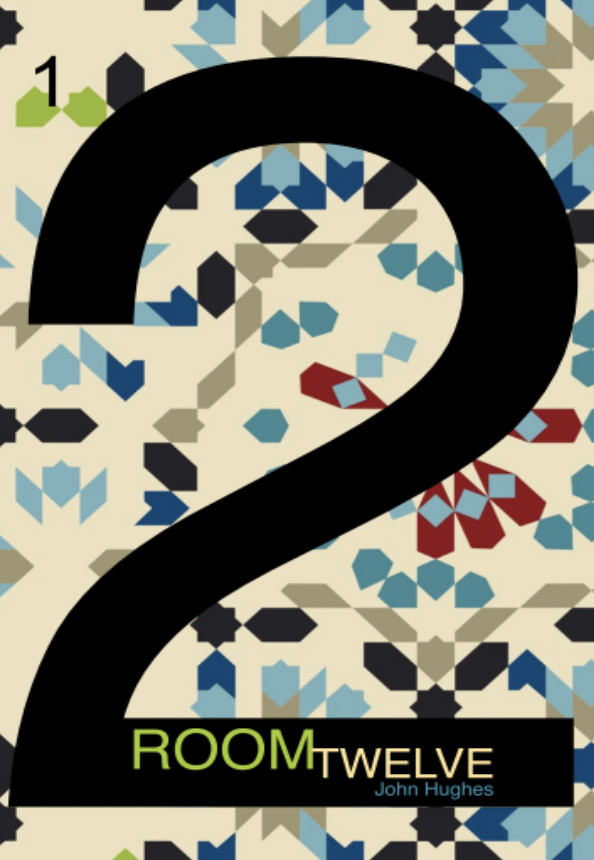
Morocco, a place of ragged, ravenous, and cruel heat mirages, where the wind shapes the sand into knives, serves as the setting for this poetic reportage to the North African country. Hughes has created an mosaic of travelogue poems that prowl, reach, and cool. His intent is to be an emissary, or a casbah companion, sparring with the scratched ugliness of the medina's charade, as the sky rains down with a bundles of money attitude that preys on tourists. The language cuts the twilight’s murky what-if riddles of the watcher and the watched, imbuing nightfall with timeless engravings. Hercules may be chained to a rock in a cave, his haemoglobin broiling in his eyes; the beggar with stumps for arms and legs, be medievally destitute, but the poems are there, exerting and untangling. For Hughes, a deserted night club’s leaves may seem like fallen bats, a swimming pool at sunrise be tranquilly redolent with cobalt or a human face bubbling with large dilated eyes.
The poems are rattling trains, their humming lines tempered by the world’s diurnal cycles. If you choose to journey past the door of Room Twelve, you will find confetti sunshine playing on the lyric sheet of the mind and the timbre of memories ripe with zestful urgency.
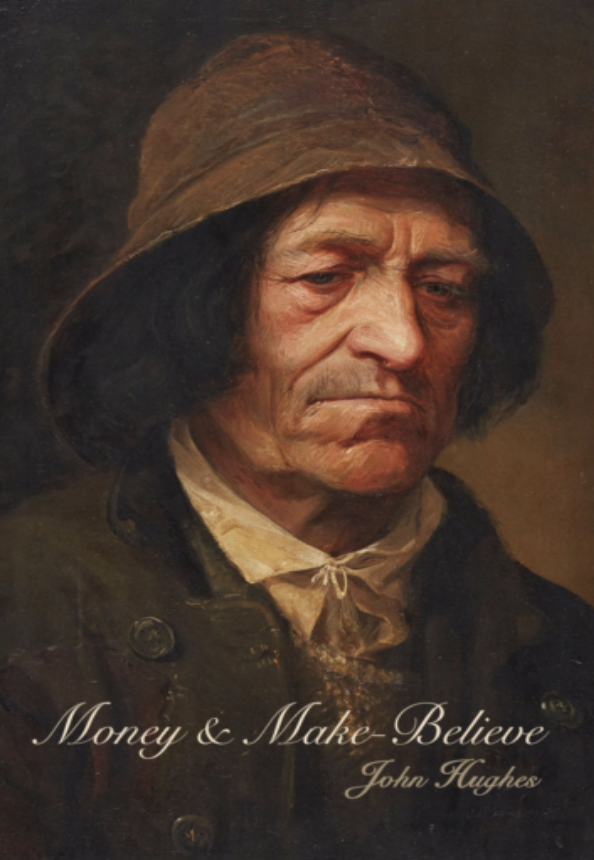
Money and Make-Believe (1994)
Money and Make-Believe is a frank and probing collection of emblematic poems interspersed with Hughes' responses to the reportage assignments he undertook as a press photographer in the north of England. During these encounters, he bore witness to society’s victims. For Hughes, giving up poverty is like giving up cigarettes; an old lady at the police station is left waiting ‘like a tap dripping in a darkened room’; and a pre-pubescent girl who has been raped is ‘a diminished thing tarnished by the smallest of nouns.’ The poems are like isolated mood chambers or broken urns where memory spills out. However, the foreboding, darker elements are counterpointed by dualistic poetry full of joy, beauty, and ritualistic defiance, where the masks of reality are confronted and positive glimpses of salvation are salvaged.
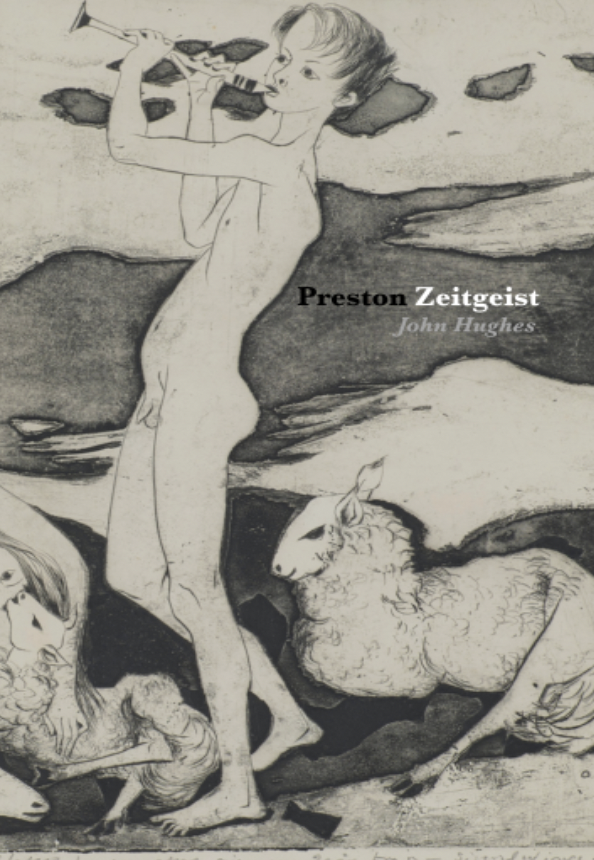
Preston Zietgeist (1994)
Preston Zeitgeist contains buckets of heart and flourishes of crass gumption. Hughes takes us into the ghostly corners of his mind with an edgy, punk do-it-yourself attitude. Migrating on a journey through a sequence of vandalised spiritual stations and interlocutions, the reader must tap into the macro and dig the microcosm of bastardization.
For Hughes, the bubble in the spirit level of life is like a fist ready to burst with curses, catechisms, and regrets. The writing ploughs through the political and personal, gripped by symbolic social idioms, influenced by the sensuality of Virginia Woolf, the psyche of Henry James, and the absurdities of Chekhov. This is early Hughes, segueing the strength to be found in fragility. His ears listen to the corn ripening, confronting the salmon and snakes, the saints, sinners and saviours of politics and science. He surveils the cartography of communication, desirously harvesting from both the urban and natural worlds, loaded with lyrical twists of fate and complicit phraseology. His compass is set and reduced to the small mercies of conversations, where gaps in the grift of understanding can act as duplicitous transparencies, starkly exposed like X-rays clarified on the poetic light box of the page.
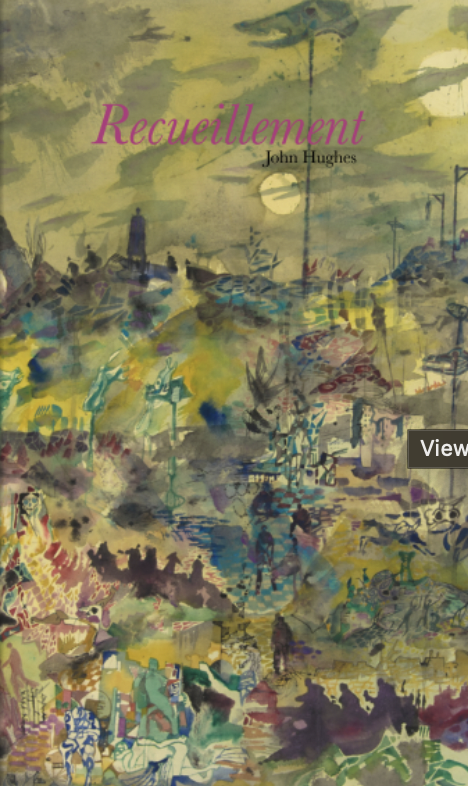
Recueillement (1993)
In the 1990s, Hughes was inspired by the seventeenth-century Pensées of its wonder-boy prodigy Blaise Pascal and the twentieth century's Italian literary impresario, Eugenio Montale. Recueillement, is his earliest foray into thinking about the rituals of spirit. He created responses to society, where a thematic fingerprint of damage, desire, and deceit became a rich departure point for his ensuing humanistic works. For Hughes, love is a swampy boneyard where loss and lust linger in a vapour trail of dislocations, honour, and confused hope. His poetry's strength lies in its willingness to express the desolation of heartfelt imperfection and the bittersweetness of lost love. It combines surliness and savagery with the need for a sanctuary of disconcerted meditative piety. Recueillement is also a quixotic collection influenced by the spirituality and idealism of the Symbolist's hermetism. His honest poems richly resonate with the Gothic tradition of entrapment. Drawing upon such a rich literary heritage, the collection is a modernistic postmodern sortie into his vision of restless Romantic cynicism.